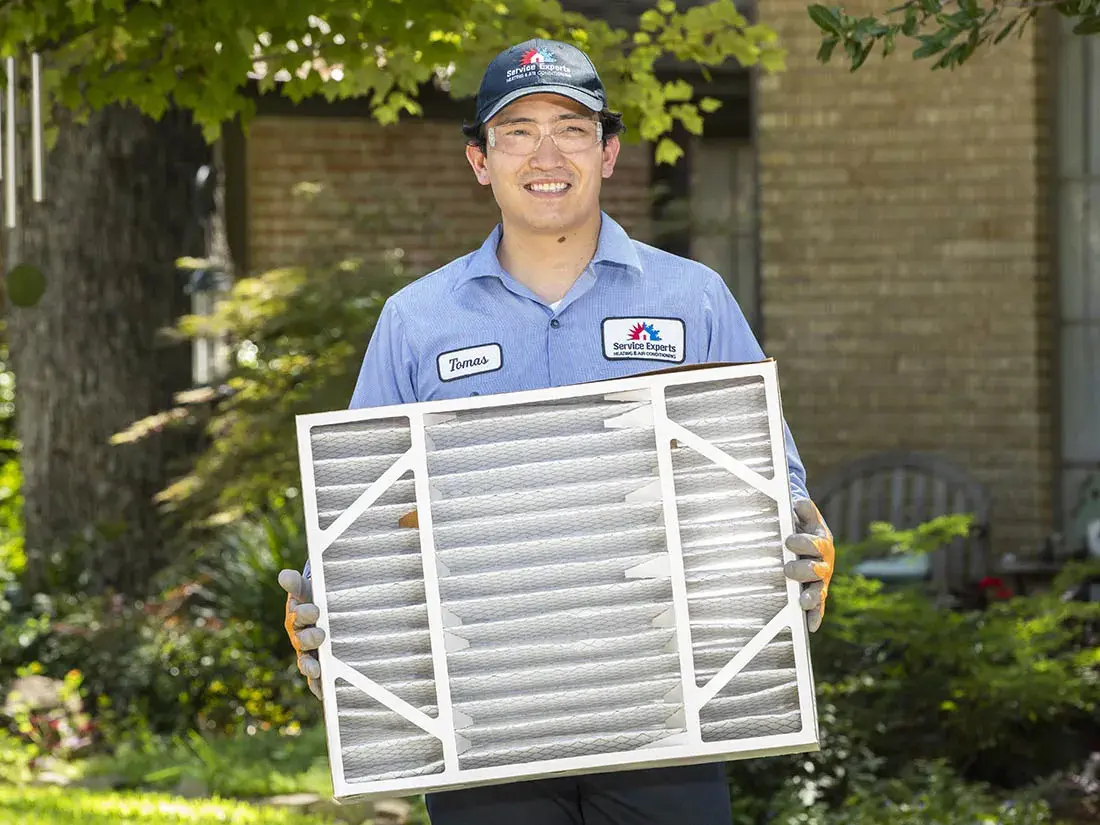
When was the last time you inspected your air conditioner filter? As a rule of thumb, you should inspect it every month and clean or replace it when it is dirty. We'll share details about the multiple types of AC filters, why they work better with regular care and step-by-step instructions on how to wash reusable filters correctly.
Kinds of AC Filters
Your filter type impacts indoor air quality, airflow efficiency and whether you should wash or replace it when it becomes dirty. Here’s an overview of some common designs:
- Disposable filters are commonly made using fiberglass along with a paper frame. These filters are designed for short-term use and are best swapped out every 30 to 90 days. They are generally inexpensive and quick to replace but less environmentally friendly because they generate waste.
- Reusable filters have sturdier frame materials like aluminum or plastic. These filters can be rinsed out and reused again, often lasting many years if cared for properly. They are more eco-friendly and budget friendly in the long run. However, cleaning them takes extra time and effort than simply changing a disposable model.
- Electrostatic filters use static electricity to trap airborne particles quickly while preserving airflow. These can be either disposable or reusable. Reusable electrostatic filters need regular washing to maintain their effectiveness.
- HEPA filters, or high-efficiency particulate air filters, are the best filters around, trapping 99.97% of airborne particles down to 0.3 microns. The majority of HEPA filters are single use, but they last for up to an entire year before needing to be replaced. While they offer high filtration, they are costlier and aren't always compatible with all HVAC systems.
Why Clean or Your AC Filter? 4 Reasons Why
It’s an easy chore to ignore, but rinsing or replacing your AC filter is important for several reasons:
- Enhanced air quality: A clean filter traps dust, pollen, pet dander and other contaminants, keeping your indoor air cleaner and healthier. This plus is especially vital for people with allergies, asthma or other breathing problems.
- Use energy more efficiently: If you never clean or change Your filter, the dust and debris caught inside it makes the AC to work even harder. A clean filter restores airflow, decreasing the unit’s workload and helping rein in your energy bills.
- Prolonging your equipment's life span: Regularly Cleaning the filter prevents the system from overheating, reduces wear and tear, and can even prolong your unit’s lifespan!
- Cost savings: A clean filter reduces costs by cutting your energy bills, limiting damage and minimizing the risk of unexpected AC replacement.
Your Guide to Cleaning Your AC Filter
Apply these steps every one to three months to enjoy all the benefits of a clean air filter:
Prepare: As the first step, turn off the AC system to prevent electrical damage. Then, access your AC filter. It within in the return air duct, in the air handler cabinet or inside the unit itself.
Remove the filter: Slowly pull out the filter from its housing. Look it over for holes or tears. If the filter is torn, go ahead and toss it.
Vacuum the filter: Get the brush accessory on your vacuum cleaner to get rid of dirt, hair, fibers and other small debris.
Wash the filter: Take the filter outside and rinse it off with a garden hose. For a more thorough clean, use a mild detergent.
Dry the filter: Lay the filter out to dry on its own completely before putting it back. But before you do so, do not run your air conditioner or you risk bringing more dust particles right back into the system.
It’s helpful to remember that disposable filters aren't washable. They need to be swapped out once they become too dirty. The replacement filter should be the appropriate size to confirm compatibility with your AC unit.
Other Elements of an AC Unit to Maintain
Besides the filter, additional AC parts require routine maintenance for peak performance and minimal expense. Reach out to an HVAC professional for help servicing parts like:
- The evaporator coils located in the indoor unit remove heat from the air. After enough time, these coils collect a lot of dust, which reduces heat transfer efficiency. HVAC Experts apply a specific coil cleaner to remove dust and grime.
- The condenser coils located in the outdoor system exhaust the heat removed from your house. These coils are exposed to the rain and snow, and become dirty fast. Although you can carefully rinse off dirt, leaves and other debris with a garden hose, leave more in-depth seasonal maintenance to a professional.
- The fan blades in your AC unit will also collect dust and dirt. An HVAC professional will examine the fan as part of their yearly tune-up, cleaning and aligning the blades as needed to return to normal performance.
- The condensate drain line in your AC unit can become clogged up with algae, mold and debris. Should this happen, call a professional technician to clear the drain line using a commercial cleaner or mold treatment.
Schedule AC Maintenance Support
Routinely servicing your AC filter and other important elements of your HVAC fosters smooth operation and better indoor air quality. Service Experts is here to help. Our ACE-certified technicians offer quick, long-lasting solutions to all your HVAC headaches. To schedule your next AC maintenance visit, please contact us today.