
Residences today are designed with energy efficiency in mind. This includes more insulation and tightly sealed doors and windows to keep energy bills affordable. While this is positive for your utility expenses, it’s not so good for your indoor air quality.
Since air has decreased chances to escape, pollutants can accumulate and affect your residence's indoor air quality. In reality, your house's air can actually be 2Ð5 times worse than the outdoors, according to the EPA. That’s not good for anyone, but it’s particularly detrimental for relatives with allergies, asthma, other respiratory conditions or heart disease.
Let’s discuss some of these everyday substances and how you can boost your residence's indoor air quality.
6 everyday Pollutants that Influence Indoor Air Quality
When you envision pollutants, you could think about smog or tobacco smoke. But lots of substances that Decrease your air quality are common products. These things have chemicals known as volatile organic compounds, or VOCs.
They involve:
- Cleaning products, such as aerosol sprays, bleach and window cleaner.
- Personal care products, such as hairspray, perfume and nail products.
- Candles and air fresheners.
- Formaldehyde, which is commonly used in plastic, foam and particleboard products.
- Furniture, window treatments and carpet, particularly when they’re brand new.
- Paints and stains.
Other typical pollutants include:
- Dust
- Pet dander
- Pollen
- Mold
Symptoms of VOC Exposure
Some people are more affected by VOCs than others. The EPA says symptoms of VOC exposure involve:
- Irritated eyes, nose or throat
- Headaches
- Dizziness
- Fatigue
In severe instances, the EPA says VOCs can cause respiratory and heart diseases.
4 Ways to boost Your residence's Indoor Air Quality
It isn’t complicated to boost your residence's air quality. Here are several recommendations from Harvard Medical School:
1. Clean Your Home Frequently
Regularly cleaning and washing surfaces that attract allergens, such as furniture, carpet and bedding, will help cut down on dust, dust mites and pet dander in your Home.
2. Frequently Replace Your Air Filter
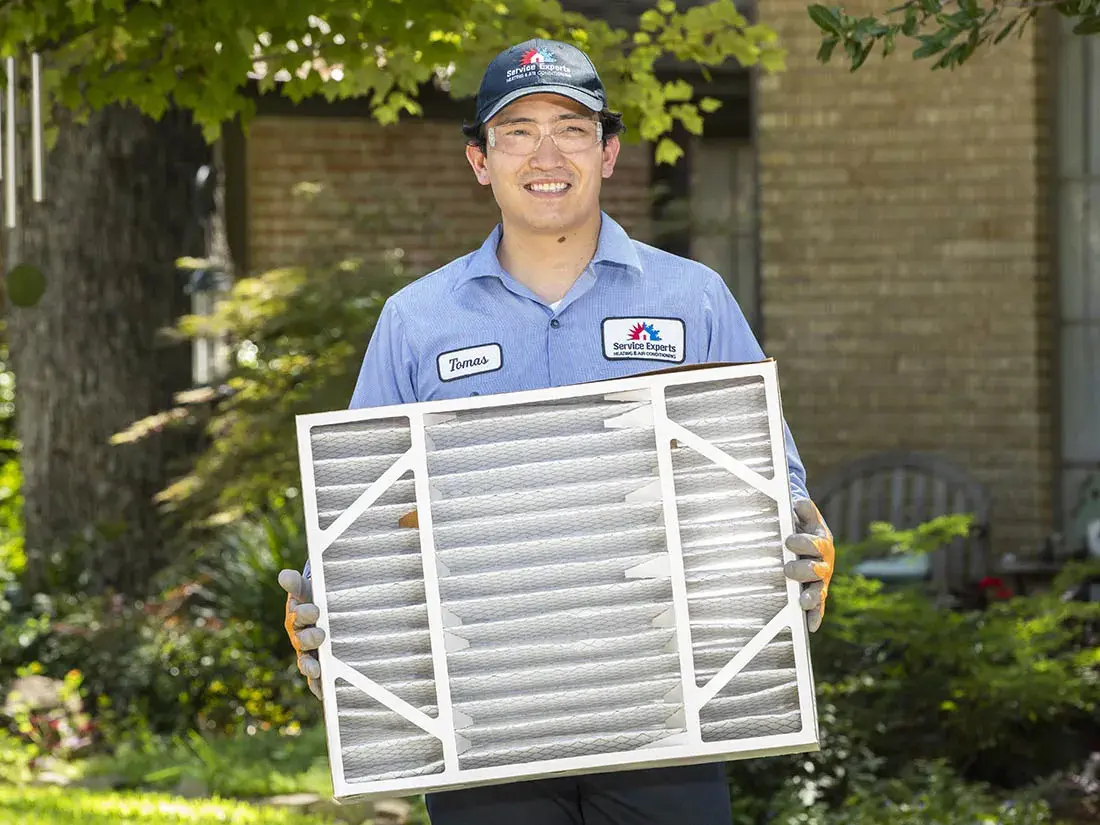
This essential filter keeps your Home comfy and air healthy. How often you should change your air filter depends on the style of filter you install. Flat filters should be swapped each month, while pleated filters should be swapped every three months. If you're not sure if your filter should be swapped, pull it out and hold it up to the light. Replace it if you can’t see light through it.
If someone in your family has allergies or asthma, we advise installing a filter with a better MERV rating. The higher the number this is, the better your filter is at getting rid of contaminants.
3. Enhance Natural Ventilation
Keep fresh air moving by opening windows whenever the temperature allows. We also advise using exhaust fans in your bathroom and kitchen as much as possible to get rid of pollutants and draw in more fresh air.
4. Chat Our Indoor Air Quality Pros
From whole-home air purifiers, Service Experts has a resolution to help your family breathe better. We’ll help you find the best option during your free home comfort assessment. Reach us at (866) 963-7996 to book yours right away!