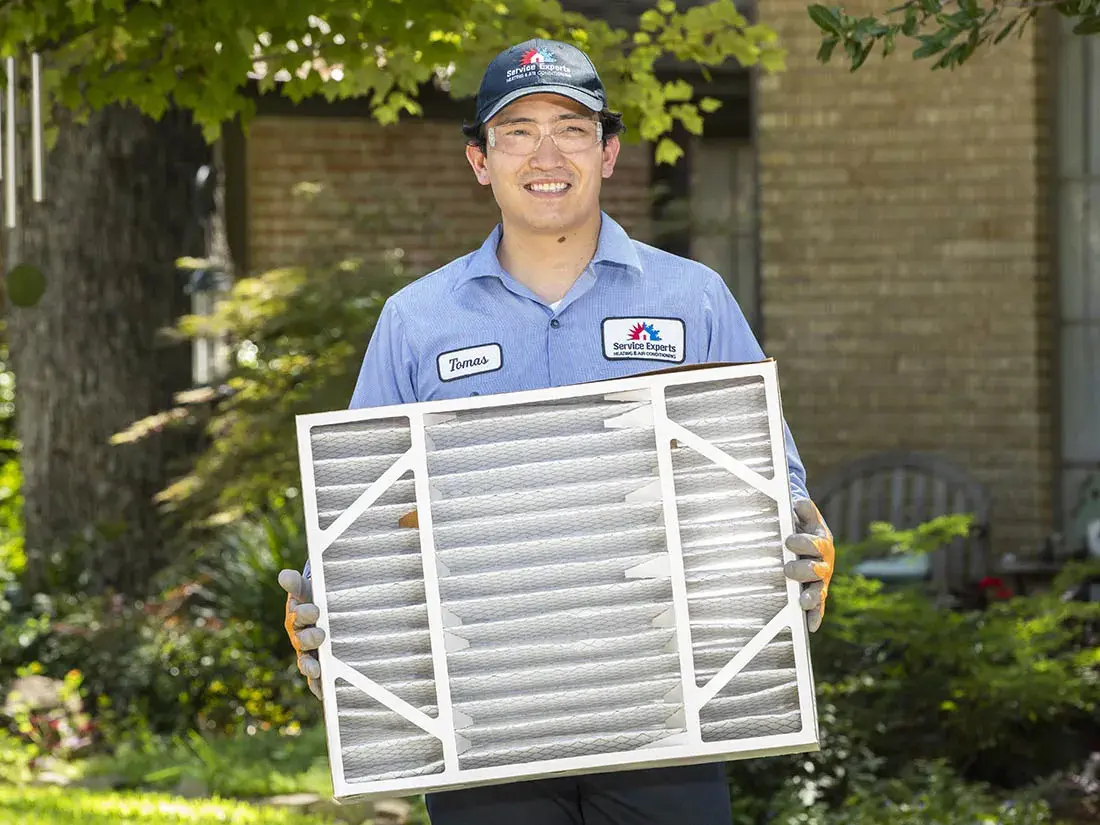

Every once in a while we’re asked what is the most important thing that the U.S. area homeowner’s can do to secure their air conditioning and heating system between their seasonal tune-ups? Our advice is simple; remember to change the heating and air conditioning air filter. Replacing furnace and return air filters is extremely important to the effectiveness of your HVAC system, plus your home’s air quality. Did you know indoor air pollution is one of the top five environmental health risks? It's not thought of often, but it is extremely important to consider. Changing the air filters is not difficult for most the U.S. homeowners, but there are usually two obstacles to actually completing this job:
- Understanding just how often to swap out your furnace or air conditioner filter.
- Replacing them at the proper time.
When To Change Your Air Filters
Most filters have a on the packaging. It may say “Lasts up to 3 months” or “Change filter every 90 days”. Pay attention at the store and you'll notice that some are meant to only last a single month, while other manufacturers (like Honeywell) have created media air cleaners with filters meant to be swapped once every 6-12 months. The industry standard seems to be once every 3 months for most higher quality filters, but we have a rule of thumb that we tell our friends, and family to go by. If it's dirty, change it! A dirty air filter can exacerbate or cause damage to pricey parts, like your compressor, so it’s best to change it out more often than to let it go. If you want to follow the manufacturer’s recommended limit, we suggest writing the date on the filter when you swap it out, and setting a reminder for yourself in your phone or on a calendar. Keep in mind that your filter manufacturer may have a different recommendation from your HVAC system manufacturer.
Figuring out how often to change your air filters relies upon several factors:
- Which air filter your system requires
- The collective air quality of your the U.S area home
- Pets – Birds, cats, dogs, hamsters (do you have one?), etc.
- Number of occupants in the house
- The level of air pollution and construction around the home
For your standard 1″-3″ air filters, the OEM specs basically tell you to change them every 1 or 2 months, which is in fact a great rule of thumb. Still, general rules aren't always for everybody. If you have to endure light to moderate allergies, you might need to upgrade your air filter or change them even more often than OEM specifications. On the other hand, if you’re in a low population area, own a less occupied home (like a vacation home) or an area where there are fewer cars around, replacing your air filters each year may be quite sufficient. Why do pets matter so much? They have a tendency to shed, which can clog your air filter quick. Clearly, the air filter is just doing its job by containing pet hair and dander, but exceptionally dirty filters can cause seriously reduced HVAC performance.
In summary:
- Vacation home or single occupant homes without pets or allergies: Change 6-12 months
- Average suburban home without pets: Change every 90 days
- Got a cat or dog: Change every 60 days
- Several pets or have allergies: Change every 30-45 days
How To Remember To Change Your Air Conditioner’s Air Filters
Here's an easy way to stay on top of this; sign up for the Service Experts Email Club. Also, your email subscription preferences let’s you set a reminder to change your the U.S area home’s air filter every 30, 60, 90, 120 or 365 days, or the date of your choosing.
How to replace your return air filter
Most of you know how to replace the air filter in their equipment, but some residences have an extra filter in the return ductwork. Whether you have one or not is dependent on the HVAC manufacturer's recommendation. Your unit is designed to handle a maximum amount of pressure in your home sweet home, and the more filters you have the harder the blower motor works, which can shorten the lifespan of your system if it isn’t designed for it. Discovering whether you have a return filter and replacing it is easy:
- Find your return air vents.
- Some covers have screws and some have tabs. Unscrew or pull tabs to remove from the wall.
- Inspect for a filter. If one is there, pull it out and write down the size.
- Verify the filter type is the one recommended by the manufacturer.
- If the filter is dirty, replace with the manufacturer’s recommended filter of the same size and type.
Incredible though it may seem, filters can dramatically alter your home’s airflow, which is why we recommend asking the manufacturer. A top tier HEPA filter that is designed to catch smaller particles will restrict airflow more than a cheaper filter. With restricted airflow comes more pressure on your system, so you should verify that your HVAC system was engineered to handle it. Otherwise, you could experience lowered heating and cooling efficiency in your home, and unit parts may wear out much faster than the standard.