
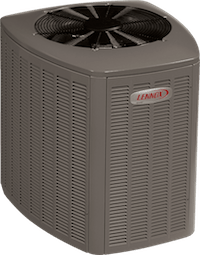
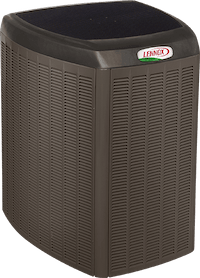
Although heat is in the name, you can use a heat pump for air conditioning. It works by shifting heat instead of making it (furnaces burn fuel to generate heat), which is why it can be used as a dual-function appliance. It’s true that heat pumps can be very efficient, although most air conditioners are about equal in terms of SEER rating. Just look at these two luxury-level cooling systems from Lennox.
What are SEER and HSPF?
SEER is an efficiency rating for ACs, and the larger the number, the more efficient it is. The difference between 23.5 and 26 is not crazy, though, and the efficiency varies depending on the model. On the other hand, HSPF is a different standard that stands for “heating seasonal performance factor” and is unique to heat pumps. It tells you how efficient the equipment is at heating. You can tell from these examples by looking at the SEER rating, air conditioners are mostly equal, if not a little better, depending on the model you choose. The largest difference between heat pumps and ACs is that heat pumps can also add warmth to your home, while an AC only cools.
Does climate matter for heat pumps?
Heat pumps are most effective in hotter climates with mild winters, save for some integrated systems that use heat pumps as an auxiliary, such as with a geothermal system. You should speak with an ACE-certified HVAC tech who has experience in your city before settling on a heat pump. If the equipment just isn’t right for your area, you could have extremely high electric bills. Once the temperature sinks too low, it’s near impossible for the heat pump to draw heat out of the air, and it may never warm your home to the temperature you set. This means you could end up running your heat pump non-stop or switching on emergency heat 24/7 during winter, which drives your energy consumption way up.
How does a heat pump stack up against a furnace?
A furnace is a more powerful heating system and is necessary for certain chillier climates. That’s because a heat pump has difficulty when the weather hits about 40 degrees Fahrenheit. As odd as it seems, during heating season, a heat pump is designed to remove heat from the air outside and use it to warm the inside air. Even when it feels cold outside, there is still plenty of available heat for the heat pump to work properly, but in exceptionally cold climates, there is not enough heat available outside to heat the air inside to high enough temperatures needed to keep warm. So while a heat pump may be ideal during the heating season for someone in Orlando, someone living in upstate New York with a heat pump would probably also need a furnace for the more extreme temperatures. If you don't have a furnace that kicks in when the freezing temperatures hit, the heat pump can run for hours trying to keep your home warm enough.
How to achieve maximum efficiency with your heat pump?
In some areas, heat pumps can be used with geothermal systems, and the heating source is better for the environment as it is not burning fossil fuels and, instead, uses the Earth’s native temperature to heat and cool. This is a fantastic alternative for specific northern climates, but more land must be available in order to install the proper piping for a geothermal system.
Just what you needed Ð one more thing to think about when it comes to your home comfort; but, remember, it’s important to examine the pros and cons of each heating and cooling system so you don’t end up buying a system that turns off when extreme temperatures hit, or investing in two systems when one would suffice.
If you can't decide which system would best fit your needs, call Service Experts to schedule a complimentary in-home quote. We are happy to answer any and all of your questions to make sure you choose the right option for your home.