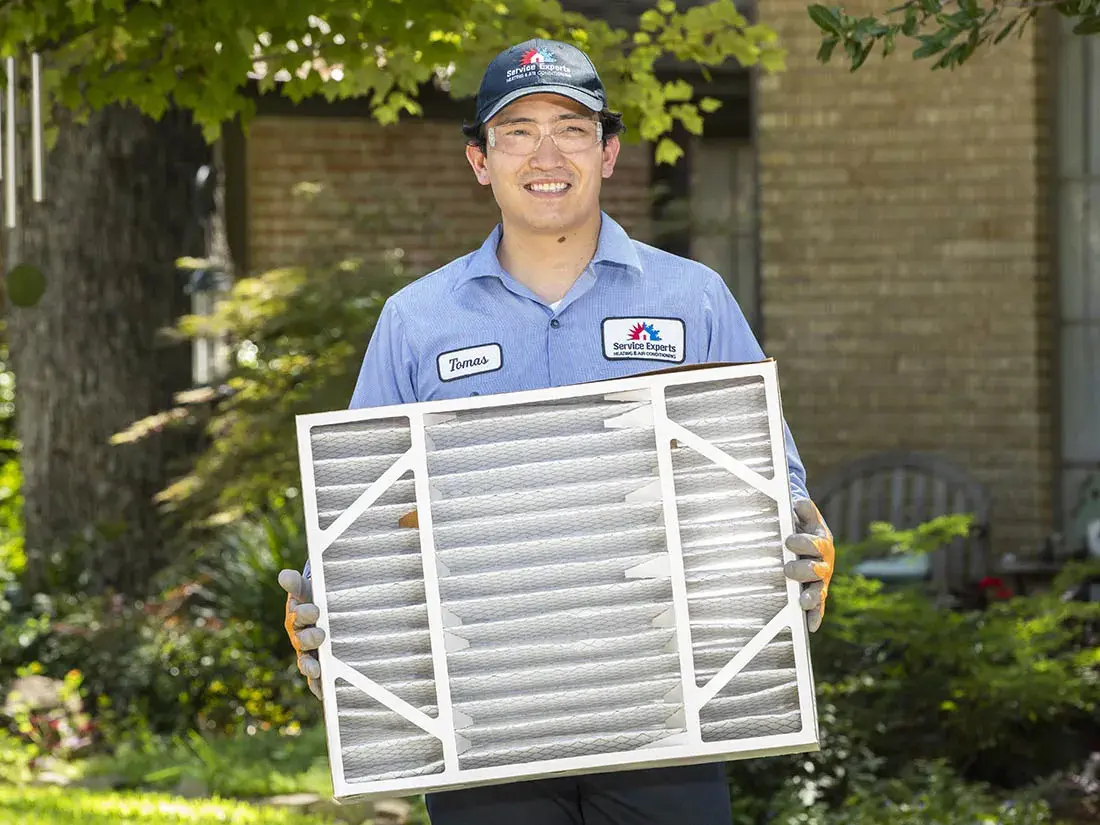
Many people are afflicted by allergies, and indoor air quality (IAQ) either makes it easier or harder to control symptoms. If your goal is to improve IAQ and limit the presence of allergens in your home, picking out the appropriate AC filter is imperative. Learn which air filter ratings are preferred for people coping with allergies and recommendations for finding the right air conditioning system filter.
Allergens and Indoor Air Quality
Allergens are materials that cause allergic reactions in some individuals. Common indoor allergens include:
- Dust mites
- Pet dander
- Mold spores
- Tobacco smoke
- Volatile organic compounds (VOCs)
- Bacteria and viruses
Common outdoor allergens include:
- Pollen
- Ragweed
- Wildfire smoke
- Smog and ozone
These allergens can be in the air or accumulate on surfaces, causing irritation for allergy sufferers when inhaled, ingested or coming in contact with eyes. Keeping clean indoor air is a critical part of managing allergy symptoms, and using an effective AC filter to remove allergens is a key component.
Do Filters Help Reduce Allergy Symptoms?
Regular AC filters are not designed to reduce allergy symptoms. Most are simply supposed to stop dust particles, textile fibers and other large airborne substances from invading your HVAC system. A higher-end filter is required to trap allergens and restrict them from circulating inside your home.
The most effective air conditioning system filters for allergies have a high minimum efficiency reporting value, or MERV rating, which measures their effectiveness at capturing small particles on a scale of 1 to 20. For example, a MERV 8 filter can capture pollen and mold spores, while a MERV 13 filter can remove smoke particles and large bacteria. An allergy air conditioning filter with a high enough MERV rating minimizes airborne allergens for much-appreciated relief.
Please keep in mind that MERV ratings of 17 to 20 describe high-efficiency particulate air (HEPA) filters designed to remove at least 99.97 percent of particles as tiny as 0.3 microns in size. While this makes them extremely good at removing allergens like dust, mold spores, bacteria and viruses from the air, most HEPA filters limit airflow so severely that they are not well-suited for residential properties. Consult a professional before buying a HEPA filter to find out if your air conditioning system is compatible.
Are Allergy Filters Worth the Expense?
While allergy air filters for an AC tend to be more expensive than standard filters, the rewards usually outweigh the costs for allergy sufferers. After all, paying for a high-quality air conditioning filter for allergies helps maintain superior indoor air quality and reduces allergy symptoms, strengthening overall health and well-being. Plus, installing a filter with a higher MERV rating can prolong your HVAC system’s life by helping it stay clean and work effectively. Remember these long-term benefits of allergy filters when determining whether to purchase one.
Recommendations for Choosing an AC Filter
Picking out the correct air filter is crucial for good IAQ and a reduction in allergy symptoms. Here are some essential tips and methods to help you choose the optimal HVAC system filter for allergies:
- Consider the MERV rating: Choose a filter with a MERV rating suited for your needs. For most allergy sufferers, a filter rated MERV 11 to 13 provides the best balance between allergen capture and airflow efficiency.
- Choose the proper filter size: Air filters are offered in various sizes, so select one that fits your HVAC system exactly. Incorrectly sized filters allow allergens to blow right through the filter, undermining the filter’s efficiency. Read your HVAC system’s manual or ask a professional for help determining the right filter size.
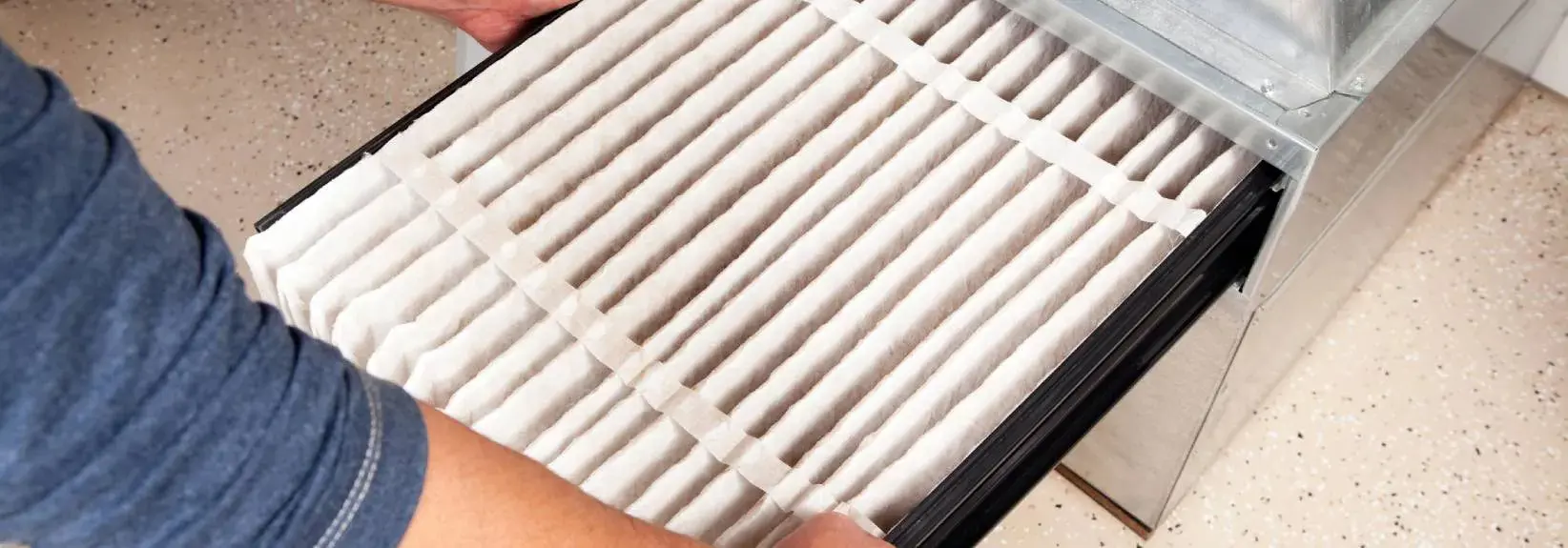
- Think about a pleated electrostatic filter: Pleated filters have more surface area for collecting allergens and are usually more effective than flat panel filters. Those with electrostatic characteristics are best of all. The electrostatic charge helps these filters attract and trap allergens more effectively than standard filters with comparable designs and materials.
- Replace your filter routinely: Once you install a filter, remind yourself to change it often for maximum performance. A good strategy is to switch out disposable filters every 30 to 90 days, but check the manufacturer’s guidelines for the recommended replacement interval.
- Consult a professional: If you’re unsure about which filter is the most suitable for your needs or how to maintain your HVAC system properly, ask an experienced technician to help you make an informed decision.
Install a High-Quality Air Filtration System in Your Home
If you or someone in your household has allergies, asthma or other respiratory ailments, improving your AC filter is one of the best things you can do to manage your symptoms. Service Experts can help you select and install the correct air filtration system for your home. For more suggestions about our indoor air quality services, please call a Service Experts office near you today.