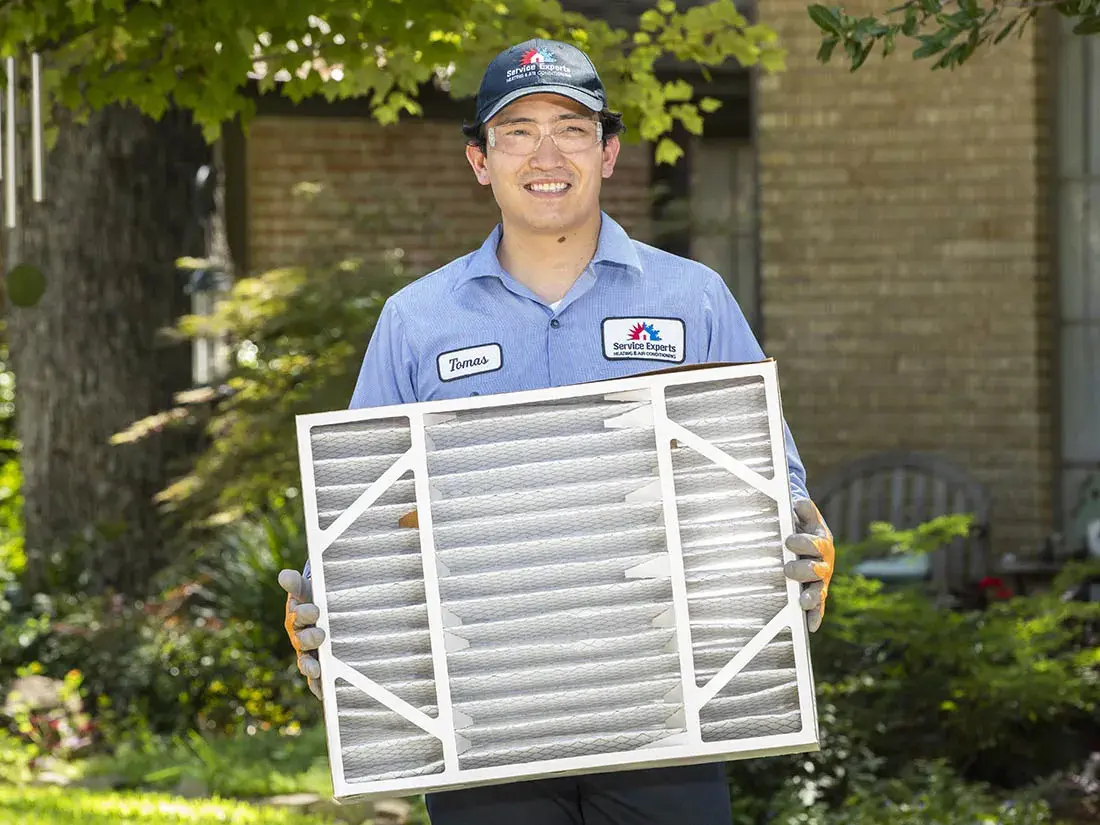

HVAC Pro Reveals Top Indoor Air Quality Mistakes Homeowners Commit
Expert Shares Indoor Air Quality Do’s and Don’ts
No matter the season, homeowners need to regularly tinker with their thermostat settings for year-round comfort. Because the weather is mild during spring or fall, people can open their windows and rely on their HVAC system less. At the same time, summer and winter can often cause issues for indoor air quality (IAQ) because the more extreme temperatures require keeping the home sealed up—to retain the air conditioning during summer and the heat in winter.
It's easier to achieve good indoor air quality if you don't make common mistakes homeowners can make. Service Experts Heating, Air Conditioning & Plumbing Chief Operating Officer Cary Reed points out these missteps and how you can avoid them.
Not Changing Air Filters Consistently Enough
It’s crucial to use the best air filter for your specific air quality needs.
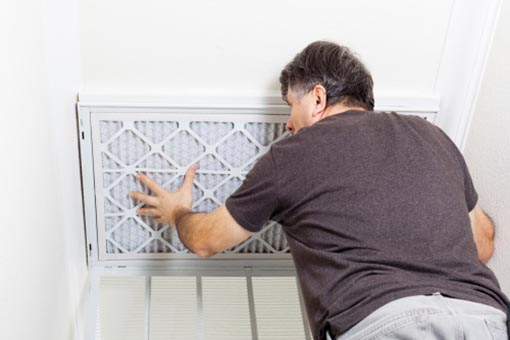
Replacing your air filters minimizes the most common airborne contaminants hiding in your home. For anyone with allergies, failure to change air filters Consistently could exacerbate sneezing, watery eyes or even require trips to the doctor. To make sure you are employing the most suitable filter for your specific system and air quality needs, familiarize yourself with the Minimum Efficiency Reporting Value ratings system, commonly shortened to MERV, Reed recommended.
“It’s based on a 1 to 20 scale, so ratings in the center of that range are usually the higher quality home filters,” Reed said. “And, if you struggle to stay on top of filter replacement, I’d consider scheduling duct cleaning service too. Afterward, set up a system that reminds you when it’s time to swap out your air filter”
Neglecting HVAC Maintenance
Neglecting routine HVAC maintenance is often the first step toward compromising your indoor air quality, Reed added. ensures it continues to deliver comfort effectively and helps to avoid major repairs at some point. Along with checking drain lines and the refrigerant supply, tune-ups also consist of cleaning coils and heating elements that air passes through before circulating throughout your home. When systems aren't running correctly, dust or moisture continues to build up and eventually will become the starting point for contaminants making it indoors.
Continuing to Use Products that Pollute the Air Unknowingly
To avoid VOCs and chemical pollutants, try and stick to green cleaners at home. Getty Images. Posed by Models.
.png.2508050728271.webp)
Many people are surprised to find out that some everyday products could be harming their health and air quality. There are three ways homeowners might be worsening their indoor air quality without realizing. The first is by always using aggressive cleaners that release fumes and what are known as volatile organic compounds (VOCs). If you can, choose an environmentally friendly cleaner instead, Reed suggested.
“Scented candles are also a common air pollutant,” Reed said. “Even if you want a fresh smell in the home, this is not the best option. I even advise against many air fresheners.”
Another way people pollute their home’s air quality inadvertently is with indoor plants that may trigger allergy symptoms. The Ogren Plant Allergy Scale (OPALS) is a straightforward 1 to 10 scale that is commonly employed to determine a plant’s potential for creating problems for allergy sufferers.
“There are some varieties that are considered great indoor plants such as ferns, ivy, fig and yuccas, but these plants can also cause more allergy symptoms. It’s a good idea to do your research before adding a bunch of indoor plants,” Reed said.
Neglecting Mold and Humidity Problems
Many homes see improvements from a humidifier or dehumidifier. Getty Images. Posed by Model.
.png.2508050729152.webp)
Excessive humidity in a home can encourage mold and bacteria growth, which in turn may deteriorate indoor air quality. If you notice a plumbing leak and water is accumulating in the walls or another area of your home, address it as soon as you can, Reed cautioned. Dampness is often where the growth of mold begins, especially if you reside in a more humid part of the country.
If you keep noticing a musty smell coming from somewhere, that’s a sign moisture may be trapped and unable to evaporate. Some homes also face issues with either too much or too little moisture in the air, which usually means balancing humidity levels with a humidifier or dehumidifier, Reed added.
Not Opening the Windows When Practical
While it may be challenging to keep the windows open right in the middle of a cold snap, there is still much of the year when cracking open a few windows for fresh air is a good idea. Not only is it beneficial for in-home air quality overall, but it can even lower radon levels. Radon is a radioactive gas naturally emitted from soil. In fact, purchasing a basic detector from a home improvement store is a prudent investment, considering high radon exposure is linked to roughly 21,000 lung cancer deaths annually, according to the CDC.
To get fresh air into your home when it’s cold outside, take advantage of midday temperature highs to open the windows in rooms and other spaces. In the summer, open them first thing in the morning when it’s cooler to refresh your home, Reed suggested.
Not Exploring Technology and Services that Can Last
Whether your home has “problem air” thanks to excess humidity levels, mold, viruses and other airborne particles, there are still lots of solutions, explained the HVAC pro.
Homeowners struggling with microorganisms often use germicidal UV light lamps, which are installed inside an HVAC system to kill bacteria, viruses and other microbes within seconds. Others use dedicated ventilation systems that replace musty air for fresh air, or whole-home air purifiers that can assure you enjoy a constant flow of fresh, clean air in your home.
“Your local indoor air quality specialists can also run tests to help you fully understand the depth of the problem,” Reed said. “Similar to HVAC system maintenance, ignoring these problems only makes them worse in the future. The good news is there are many ways to solve air quality concerns.”
For details on how to reach peak indoor air quality, visit ServiceExperts.com/indoor-air-quality-services/ or schedule your HVAC maintenance today.