Picking the Right Air Filter for Your HVAC System
Keeping clean, pure indoor air is a top priority for comfort-minded homeowners and using the right HVAC air filter plays a crucial role in providing it. Take a look at this guide to find the Right filter type, dimensions and efficiency rating for your home’s indoor air quality needs.
When Should You Change Your Air Filter?
The first thing to to determine is how often you should replace the filter. The standard industry advice for conventional residential filters is to replace them every 90 days for the average home without pets. If you have a four-legged companion, shorten this to every two months. For homes with many pets or family members with allergies, change the filter as often as every 30 days.
Picking the Right Air Filter Size
Not all heating and cooling systems are identical, so manufacturers make air filters to fit various slots. Getting the correct size means a perfect fit without allowing air to bypass the filter. Here are a few tips to find out the best filter size:
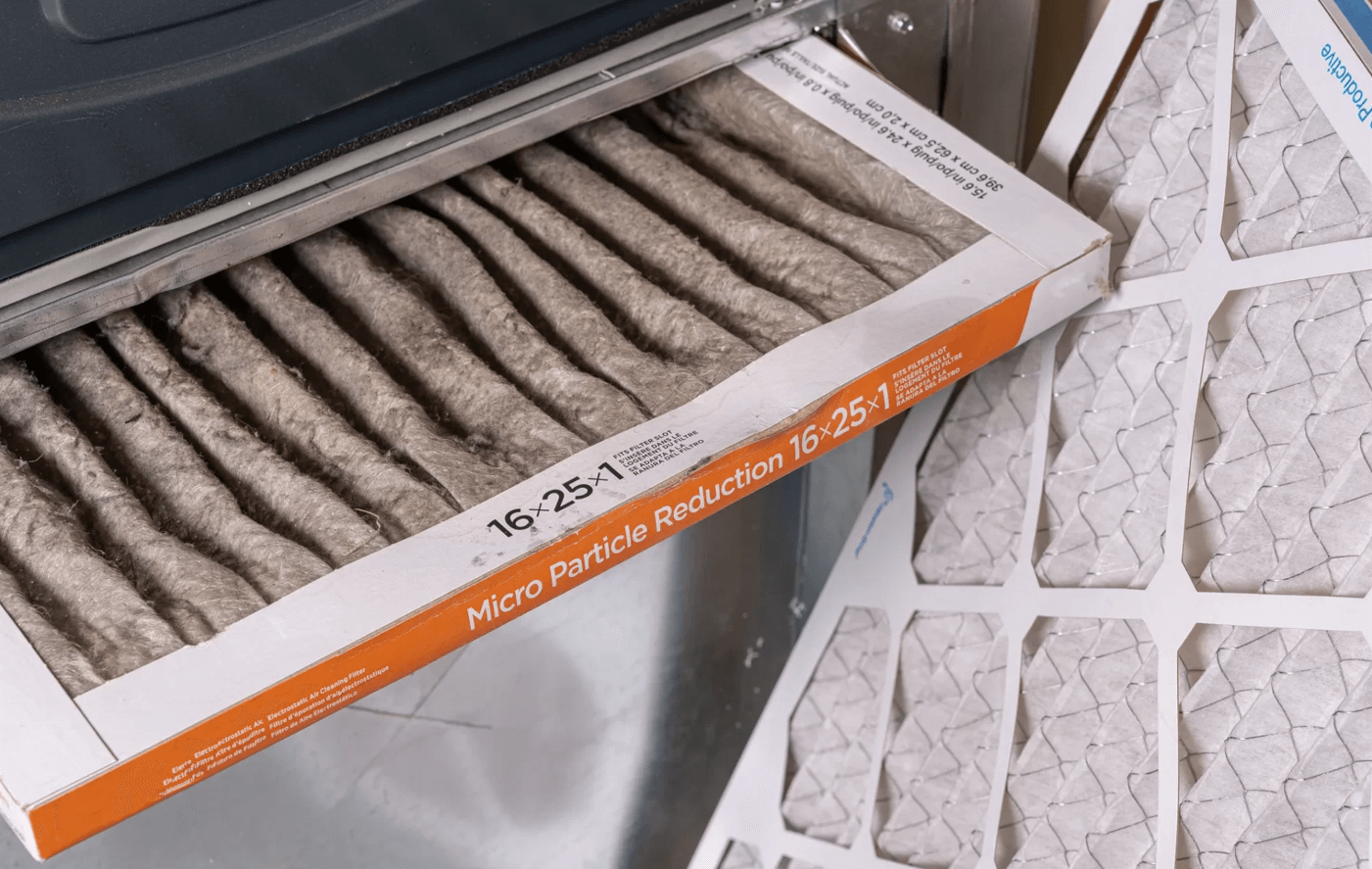
- Look at the existing filter for a label listing the dimensions.
- Compare this with the filter slot. Measure the height, width and depth so there's a perfect fit without forcing the filter into the opening.
- Consult the HVAC manual, which should indicate the filter size and type suggested for your system.
Kinds of HVAC Air Filters
Several filter materials and designs are all offering air quality improvements, and each is tailored to different needs. Here are some widely used types:
- Fiberglass filters are the simplest and cost-effective option. Made from layered fiberglass strands, they help trap larger particles that could damage the equipment. However, they don’t filter small particles that are harmful to breathe, so don’t count on them to deliver top-of-the-line indoor air quality.
- Pleated filters using polyester or cotton folds offer a bigger surface area to trap smaller particles.
- Electrostatic filters implement self-charging fibers to attract and trap airborne particles. They come in both single-use and washable forms.
- HEPA filters offer impressive filtration. However, because they drastically restrict airflow, they are usually reserved for medical facilities, clean rooms and other commercial industries. If you prefer a HEPA filter in your residential HVAC system, collaborate with a heating and cooling technician to determine compatibility.
Comparing Air Filters with MERV Ratings
Minimum efficiency reporting value, or MERV, is the system used to assess air filter performance. Ratings span 1 to 20, with the highest numbers indicating a filter’s ability to trap finer particles.
- MERV 1-4 represent the common air filters, helping trap large particles such as pet dander, pollen, lint and carpet fibers. They provide minimal filtration but are budget-friendly for simple applications without pets or allergies.
- MERV 5-8 are ideal for homes and commercial buildings where pet dander, mold spores, pollen and dusting aids need management. They strike a balance between cost and filtration capability, making them a common selection among homeowners.
- MERV 9-12 apply to filters that can capture legionella, humidifier dust, auto emissions and more. They provide improved air quality to help relieve allergies or mild asthma symptoms.
- MERV 13-16 are seen as top-of-the-line filters for residential use. They’re found in hospitals and other healthcare settings where clean and healthy air is necessary. These filters can capture bacteria, tobacco smoke and even some virus particles.
- MERV 17-20 ratings are mostly found in HEPA filters, capable of trapping approximately 99.97% of particles down to 0.3 microns in size, including lead dust, humidifier dust, asbestos fibers and other microscopic particles.
Tips for Making Your Selection
When deciding on the Right home air filter, focus on these factors:
- Household needs: Pet owners, people with allergies or asthma, and homes in dusty or high-pollution environments may do best using a filter with a greater MERV rating.
- System compatibility: Before you go out and buy a filter with a rating of MERV 12, check if your HVAC system can support the increased filtration without restricting airflow.
- Filter thickness: Thicker filters, ranging from 4 to 5 inches, usually work longer and offer stronger filtration than standard 1-inch filters. Just make sure your system can accommodate the size.
- Cost vs. benefits: High-end filters are more expensive but need replacement less often and provide better air quality. Calculate the potential long-term savings and health benefits before you make your decision.
- HVAC professional’s advice: The best way to feel confident in your decision is to consult an HVAC technician who can offer expert advice based on your home’s system and air quality requirements.
Breathe Better with Service Experts Heating, Air Conditioning & Plumbing
When you're ready for a better air filter, let Service Experts assist you in making the Right selection. protect your HVAC equipment and relieve asthma and allergy symptoms. We take pride in improving the health of your life and comfort with help from our personalized, professional services. For assistance with Picking the right air filter or other HVAC needs, please contact Service Experts today.